Women’s fashion for autumn-winter 2026 revolves around a few key shifts that are reshaping everyday silhouettes. The return of maximalism, the growing prominence of dark, saturated palettes, and European regulations changing how unsold clothing is handled all set the scene for this season’s elegant trends.
Saturated colours and textural contrasts: the season’s visual vocabulary
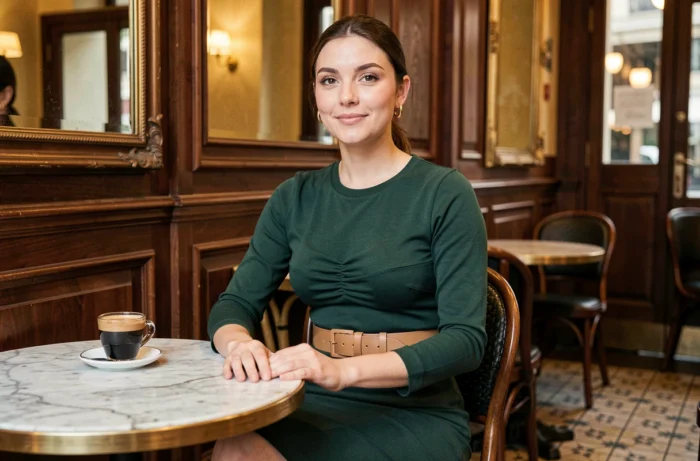
Purple, in shades ranging from plum to aubergine, is taking centre stage in the autumn-winter 2026 collections. This rich hue works just as well on a structured coat as on a fine-knit top worn to the office. It replaces the neutral beiges and greys that dominated previous seasons under the influence of “quiet luxury”.
This palette is about more than just one colour. Unexpected combinations, such as deep purple worn with forest green or matte burgundy, create textural contrasts that refresh winter outfits. A ribbed-knit sweater paired with a soft leather skirt, for example, creates enough tactile contrast to give an outfit structure without unnecessary accessories.
For those exploring fashion according to Mon Idylle at Mlle, this kind of pairing is a great example of how one colourful piece and a well-cut basic can be all it takes to put together a cohesive everyday look.
Measured maximalism: one statement piece instead of a show-stopping look
The maximalism making a comeback on the runways doesn’t mean piling on prints or volume. For everyday wear, the trend translates into one statement piece paired with basics. An oversized blazer with pronounced shoulders, straight-leg jeans and flat ankle boots. Or a pleated midi skirt in a shiny fabric, worn with a plain turtleneck.
This approach solves a recurring problem: how to break away from an overly uniform wardrobe without going overboard. The idea is to create a controlled imbalance. The eye-catching piece is surrounded by understated clothes that let it take centre stage.
What the autumn-winter 2026 shows look like in practice
Silhouettes inspired by the 1950s and 1960s are reappearing in the collections. Fitted pencil skirts, defined waists, and suits that are structured yet softer than their classic counterparts. These cuts don’t call for an entirely new wardrobe. They work with existing pieces, as long as you follow a few rules of proportion.
- A below-the-knee pencil skirt looks more polished with a slightly loose top, avoiding an overly rigid “office uniform” effect.
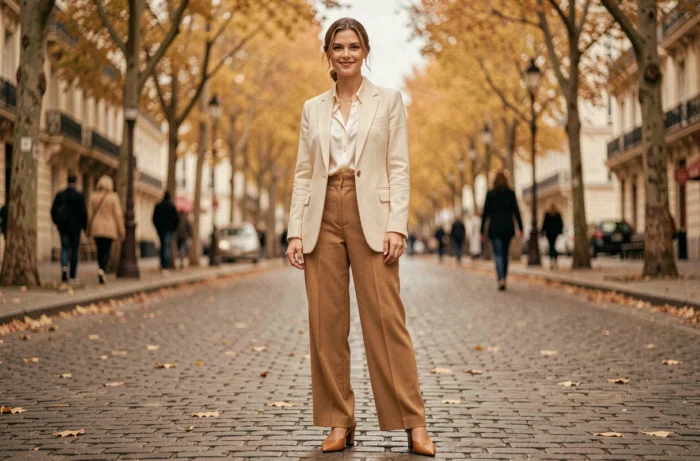
- A suit with structured shoulders can be worn open, without a buttoned-up shirt underneath, for a less formal look that works for everyday wear.
- 1960s-inspired silhouettes, with their geometric lines, work well with flat shoes without losing their elegance, making them comfortable to wear all day.
Office wear and women’s style: what’s changing in 2026
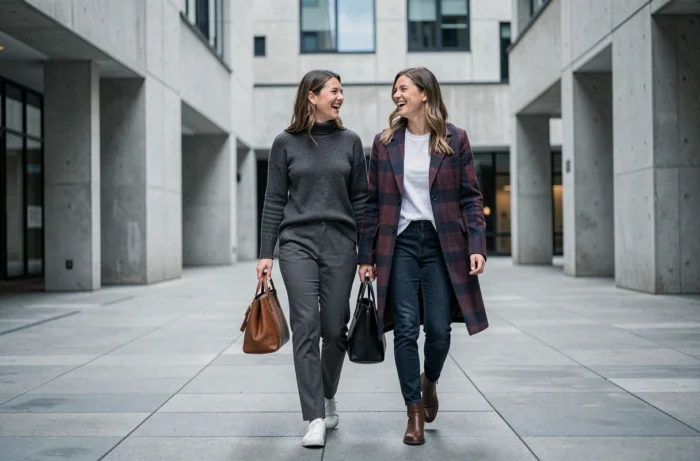
Office wear is becoming more feminine, but not simply through the return of the formal suit. The autumn-winter 2026 collections feature pieces that transition from the office to the rest of the day without requiring a complete change of outfit. Wide-leg pleated trousers, for example, work with loafers in the morning and heeled ankle boots in the evening.
The line between workwear and personal style is becoming blurred. Fabrics play a part in this transition: a subtly textured material (crepe, fine wool, corduroy) offers enough structure for the workplace while remaining comfortable throughout the day.
The pitfall of overly trendy office wear
Wearing a statement piece to work calls for a little judgement. A saturated colour like aubergine works well on an accessory or top, but an all-purple outfit in a meeting can be distracting. The unspoken rule is to keep the standout element to just one area of the body: the top, the bottom or the shoes.
European textile regulations: a context shaping consumer choices
Since 19 July 2026, large companies have generally no longer been allowed to destroy their unsold clothing and footwear. They must consider selling, donating or preparing these items for reuse, subject to exemptions under the European framework.
This regulation doesn’t directly change what appears in shop windows. It changes how stock moves through the supply chain. Quality pieces that were once destined for destruction are now reaching second-hand and clearance channels. For discerning shoppers, this could mean greater access to well-cut clothes at prices below those of new items.
Clothing traceability is also becoming a practical concern, and several European initiatives aim to make information about the composition and origin of items for sale more transparent.
- Unsold textiles from large companies must be directed towards reuse or donation rather than destroyed.
- Access to quality pieces through clearance or second-hand channels could expand as a result of these new obligations.
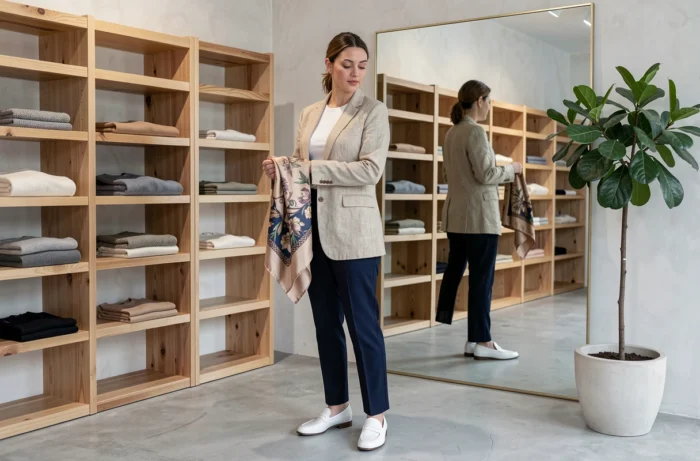
Elegant trends in 2026 are shaped as much by clothing choices—saturated colours, structured silhouettes and measured maximalism—as by a regulatory framework encouraging us to rethink how long clothes last. This season, everyday style is less about accumulating pieces and more about getting the combinations just right.