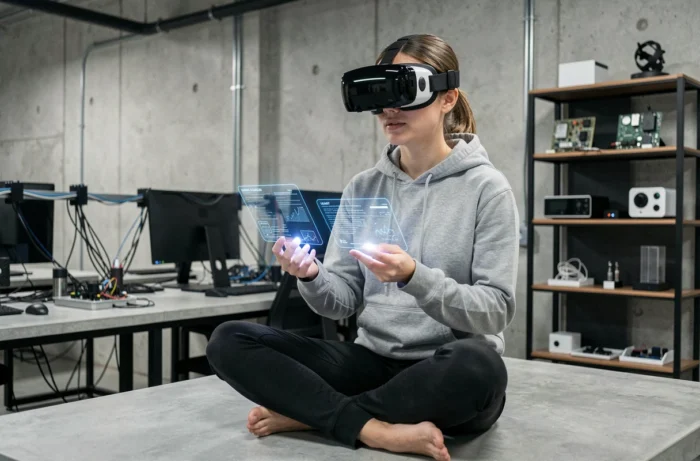
This year’s technological landscape is marked by a convergence between new European regulatory constraints and the acceleration of artificial intelligence-related uses. On the hardware side, manufacturers must deal with unprecedented cybersecurity and repairability requirements. On the software side, AI models are increasingly being integrated into local environments, while the issue of power supply for data centers is becoming a structuring topic.
This year’s geek and high-tech trends reflect industrial and regulatory trade-offs that are concretely changing what consumers can buy and demand.
Cyber Resilience Act and connected objects: what changes at purchase
Articles dedicated to tech trends rarely mention the regulatory framework affecting connected products. The European Cyber Resilience Act imposes new security obligations on manufacturers, importers, and distributors of products containing digital elements. Specifically, a connected speaker, a robot vacuum, or a surveillance camera sold in Europe will need to meet documented requirements from the design stage.
For buyers, this means that the price of a connected object no longer only reflects its technical specifications. It now includes a compliance cost related to security updates and post-market monitoring.
Brands that neglected these aspects risk disappearing from European shelves or having their products withdrawn from the market. Following the news on Geekette Inside helps identify which manufacturers take these obligations seriously and which are lagging behind.
This regulation also creates a sorting effect in the low-cost connected objects market. Products imported without a software support structure in Europe will find it harder to remain available. For home automation enthusiasts, compliance with the Cyber Resilience Act becomes a purchasing criterion as relevant as compatibility with a voice assistant.
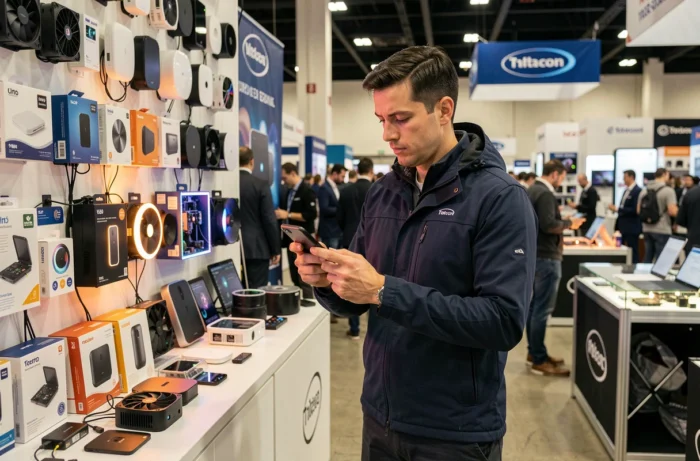
Artificial intelligence and power consumption of data centers
The rise of generative AI has shifted a bottleneck: it is no longer raw computing power that limits the deployment of models, but the power supply of the infrastructures that host them. Several data center operators are looking to produce or store electricity on-site or nearby to circumvent grid connection constraints.
However, this trend remains partial. These installations still depend on the grid for balancing or backup, and their connection raises questions about cost-sharing and flexibility with electricity operators. Power supply is now structuring the strategy of AI players, not just their algorithmic roadmap.
For end users, the consequence is indirect but real: cloud services that depend on these data centers could see their prices evolve based on local energy costs. Streaming video games, AI-assisted creation tools, and online storage are all affected.
Repairability of smartphones and tablets: the label that reshuffles the cards
The European rules applicable to smartphones and tablets introduce an energy label featuring a repairability class. This label, comparable to what consumers know for refrigerators or washing machines, makes visible a previously opaque criterion: the ease with which a device can be repaired.
The requirements do not stop at labeling. They also cover:
- The availability of spare parts for a defined period after market launch
- The obligation to provide software updates for a minimum period
- Access to repair documentation for independent professionals
For the geek community, this change has a concrete impact on the choice of a phone. A device rated well for repairability retains resale value longer and generates less frustration in case of breakage. Repairability becomes a technical argument, not just an ecological one.
European AI Act: a multi-tier compliance timeline
The European regulation on artificial intelligence is not limited to a single deadline. The AI Act provides for a gradual deployment of its obligations, with distinct deadlines depending on the risk level of the systems involved. Some prohibitions are already in effect, while other obligations will only come into force later.
This staggered timeline has a direct consequence for developers and companies integrating AI into their products or services: compliance cannot be prepared all at once. Video game publishers using recommendation systems, AI content creation platforms, and automatic moderation tools are all affected to varying degrees.
For users, this means that some AI services available in France could be modified or restricted as regulatory deadlines approach. Facial recognition technologies in mixed reality games, for example, are directly targeted by high-risk categories.
Geek trends to watch beyond hardware
This year’s tech trends are not limited to hardware. Several software and usage developments deserve the attention of enthusiasts:
- AI agents capable of acting in software environments (modifying game settings, managing digital wallets) raise questions of control and responsibility
- Local execution of AI models on personal devices reduces dependence on the cloud but raises questions about performance on consumer-grade hardware
- Connectivity standards are evolving towards 5.5G, with initial tests related to next-generation uses
The boundary between autonomous software and unsupervised action remains blurry, and legal frameworks struggle to keep pace with technical deployments. This is likely to be the topic that will most mark geek culture in the coming months.
The common thread of this year can be summed up in one word: responsibility. Responsibility of manufacturers regarding the Cyber Resilience Act, energy responsibility of data center operators, responsibility of publishers regarding the AI Act. Tech enthusiasts who follow these regulatory developments as closely as product announcements will have an edge in making informed purchasing and usage choices.