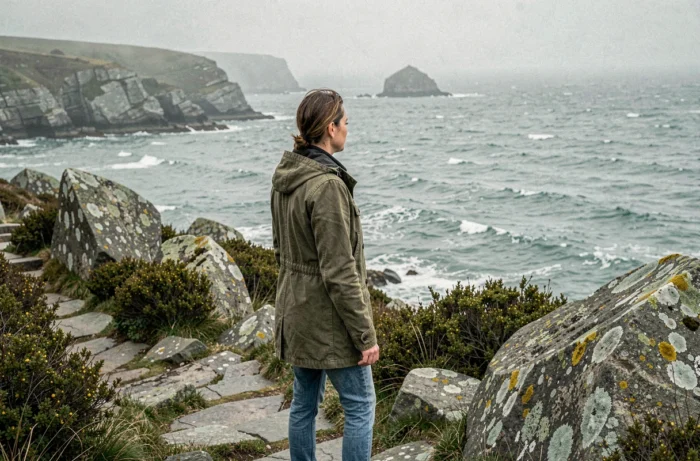
Brittany packs a remarkable variety of landscapes, coastlines and microclimates into a relatively compact area, significantly changing the range of leisure activities available from one season to the next. Between a coastline that gets very busy in summer and an inland area growing in popularity for cycling and hiking, access and trail conditions vary depending on the time of year, mode of transport and condition of natural sites. Choosing an activity in Brittany involves more than checking the weather.
Car-free activities in Brittany: what public transport connections really make possible
Most guides to Brittany list notable sites without explaining how to reach them other than by car. The TER rail network and BreizhGo bus routes serve the main coastal towns (Saint-Malo, Saint-Brieuc, Quimper, Vannes), but connections to out-of-the-way natural sites remain infrequent outside the summer season.
For a day trip from Rennes, the stations at Dinan and Dol-de-Bretagne provide access to sections of the GR34 coastal trail without complicated transfers. By contrast, reaching the headlands of northern Finistère or the Gulf of Morbihan by public transport often requires two transfers, with journey times that cut into the time available for activities.
Cycling offers an alternative, particularly thanks to the greenways that cross the inland areas. The impact of cycle tourism on rural communities is well documented, and inland Brittany is just as rewarding to explore by bike as the coast. However, the FUB’s 2025 Cycling Barometer highlights the need for better infrastructure in Brittany, with some sections considered dangerous. Checking your exact route before setting off, rather than relying on a general map, helps avoid unpleasant surprises.
Among the leisure activities listed by Portail Breton, several guides provide details on access by different modes of transport, making it easier to find outings that are possible without a car.
Season and water quality: two things to check before a nature outing in Brittany
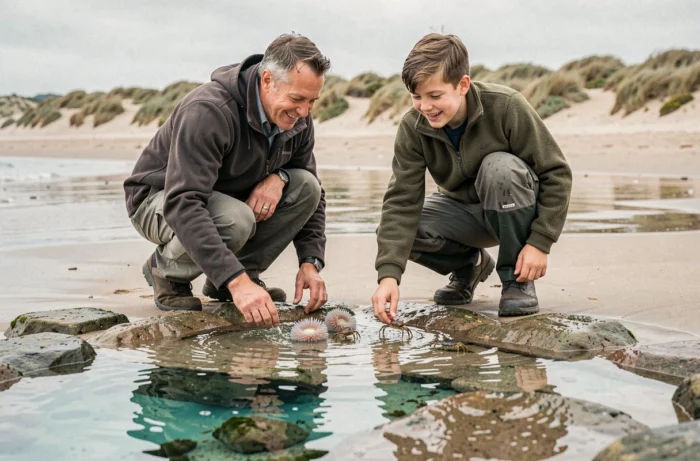
Summer is still peak season, but the number of visitors puts pressure on the most popular coastal sites. The sandy beaches of southern Finistère and Morbihan attract so many visitors that the experience can suffer, especially in August. Outdoor activities inland help spread visitor numbers beyond the coast.
Swimming, one of Brittany’s most popular summer activities, calls for more than just checking the weather. Regular tests are carried out on the bacteriological quality of water at supervised beaches, including checks for E. coli. The risks associated with green algae, documented in several journalistic investigations, affect certain bays where intensive livestock farming has degraded water quality. Checking local health alerts before choosing a swimming spot is a precaution that’s often overlooked.
In autumn and spring, hiking takes centre stage. The GR34 runs along almost the entire Breton coastline, with sections that can be hiked year-round. However, some trails may be closed by prefectural orders, particularly after storms or because of landslide risks. Checking local closure notices before a hike can save you from finding a trail blocked after an hour’s walk.
Protected natural areas in Brittany: what you can do and what is restricted
Brittany has several regional nature reserves and protected sites, each with its own rules. A common misconception is that protected status means all leisure activities are prohibited. The reality is more nuanced: each protected area has its own rules for visitors, which may allow walking, kayaking or shore fishing while restricting other activities.
Several new regional nature reserves are currently being established in Brittany, which could change access arrangements at sites that are currently open to the public. For water sports such as kayaking, paddleboarding and dinghy sailing, restrictions often apply to nesting areas or protected seagrass beds, with seasonal closures in place.
- Before going kayaking or paddleboarding, check the rules for your chosen site (posted at the town hall or on the maritime prefecture’s website) to find out which areas are open and when restrictions apply.
- For shore fishing, prefectural orders set minimum catch sizes and identify prohibited areas. These rules are updated frequently in response to shellfish health assessments.
- Walking in nature reserves is generally allowed on marked trails, but off-trail walking and foraging may be restricted or prohibited, depending on the site.

Family activities: practical criteria for choosing the right outing
When travelling in Brittany with children, it’s best to choose activities with a suitable duration, level of physical effort and accessibility. A walk along the GR34 with young children should be limited to short, relatively flat sections, typically between two accessible beaches.
There are free nature outings, particularly during the Toussaint school holidays, when several Breton towns offer activities run by local associations. Free activities in Brittany are more plentiful outside the summer season, when local authorities are looking to attract families during quieter periods.
For families travelling with pets, access to beaches and campsites is another consideration. Some campsites in Brittany welcome dogs, but dogs are often banned from supervised beaches in July and August. Restrictions are generally lifted outside the high season.
- Choose activities with a sheltered place nearby (a village, café or museum) in case of rain, which is common even in summer.
- Check tide times for shore fishing or walks across the foreshore, as Brittany has some of the largest tidal ranges in Europe.
- Plan an alternative route for coastal hikes, as some trails may close without notice after strong winds.
It pays to treat choosing a leisure activity in Brittany as a bit of logistical planning: the season, transport, local regulations and the day’s weather are a more reliable guide than a simple list of ideas. The best outings in Brittany are often the ones you’ve checked the day before.