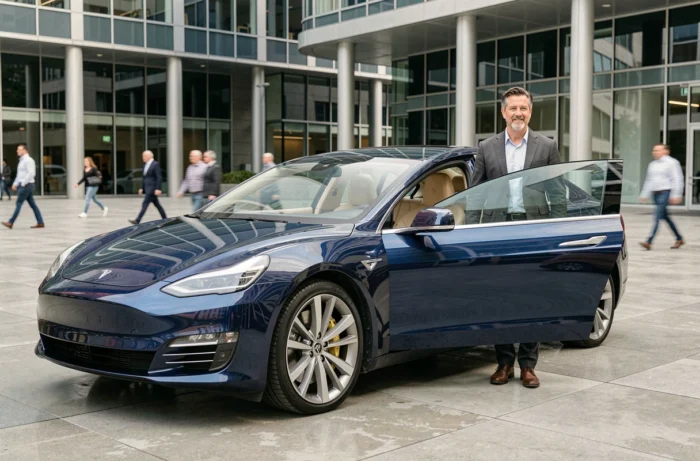
The European automotive market is undergoing a rapid shift in its powertrain mix. In September 2026, new car registrations rose, driven by electrified powertrains, while sales of petrol and diesel models declined. This shift, which is still uneven across countries, is reshaping automakers’ strategies and buyers’ choices.
Batteries and cell chemistry: what’s changing in electric vehicles
The rise of electric cars is about more than increasing sales volumes. Competition is shifting towards battery technology, where automakers can set themselves apart.
Lithium iron phosphate (LFP) cells are gaining ground against nickel manganese cobalt (NMC) cells. The reason is economic: LFP is cheaper to produce and uses neither cobalt nor nickel, two metals whose prices fluctuate significantly. The trade-off is lower energy density, which means slightly less range for the same battery size.
Following Cars The Stars’ automotive news helps explain how these technical choices affect the models sold in Europe.
European automakers face a twofold challenge. On the one hand, they need to gain control over the cell supply chain so they are not entirely dependent on Asian suppliers. On the other, they must offer battery packs that support fast charging, which remains a barrier to adoption for many motorists.
Hybrid, plug-in hybrid, all-electric: Europe’s market is not shifting all at once
A closer look at the European market figures reveals a more nuanced picture than the narrative of a mass shift to all-electric vehicles. According to ACEA (October 2026), hybrids remain Europe’s most popular electrified powertrain.
Plug-in hybrids are also gaining ground, but at very different rates from one country to another. This national variation makes it difficult to speak of a uniform trend across the continent.
Three powertrains, three reasons to buy
- Conventional hybrids (HEVs) appeal to motorists who want to reduce fuel consumption without changing their charging habits. The price premium over a combustion-engine car is moderate.
- Plug-in hybrids (PHEVs) are aimed at drivers who make short daily trips and have access to home charging. Once the electric range is used up, the vehicle operates like a conventional hybrid.
- All-electric vehicles (BEVs) are for drivers willing to adapt their mobility to a charging network that is still developing. Purchase prices remain higher, but running costs are lower.
A common mistake is to interpret a monthly spike in electric vehicle sales as an established trend. Year-to-date figures tell a different story, with market shares growing at a less dramatic pace than some individual months might suggest.
Chinese automakers in Europe: pricing, model range and expansion strategy
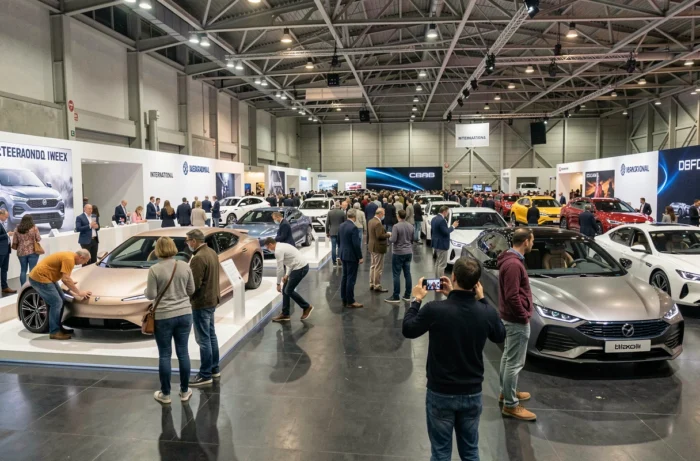
The 2026 Paris Motor Show confirmed the growing presence of Chinese brands. BYD, now familiar to the general public, was joined by lesser-known automakers such as Omoda, Jaecoo, Chery and Geely. Their shared goal is to establish a lasting presence in Europe with competitive prices and generous technology features.
These brands’ strategy is not based on low prices alone. They are investing in physical dealerships and after-sales service centres, both of which are key to earning the trust of European buyers. A Chinese automaker that sells online without a local point of contact may struggle to win over anyone beyond early adopters.
Regulation and tariffs
European discussions about tariffs on electric vehicles imported from China add another layer of uncertainty. CO₂ emissions rules could change, but the proposals under discussion have not yet been adopted. The current regulatory framework therefore remains in force, making medium-term forecasts uncertain.
Software-defined vehicles: what SDV means in practice
The term software-defined vehicle (SDV) refers to a model whose features can evolve after purchase through over-the-air updates. Embedded software is no longer limited to the infotainment system: it also controls driver-assistance systems, energy management and even certain chassis settings.
For automotive suppliers, this shift changes the nature of their relationship with automakers. A supplier that once provided a mechanical part must now also provide the software layer that goes with it—or accept that the automaker will develop it in-house.
Data and connectivity
SDVs generate a continuous stream of usage data. Questions around who owns, stores and uses this data have become industrial and legal issues in their own right. Automakers see this data as an opportunity to offer paid services after purchase, such as pay-per-mile insurance, predictive maintenance and features that can be activated on demand.
- Predictive maintenance analyses component wear in real time and alerts the driver before a breakdown, rather than relying on a fixed service schedule.
- On-demand features let drivers unlock options already physically installed in the vehicle (heated seats, extra power) through a subscription or one-time purchase.
- Connected insurance adjusts premiums based on actual driving behaviour, measured by the vehicle’s sensors.
The 2026 automotive market is about more than a race to electrification. The transition is unfolding across battery chemistry, the coexistence of multiple powertrains, the arrival of new players from different regions and the transformation of the car into a software platform. Pending regulatory decisions in Europe will determine how quickly each of these trends takes hold.