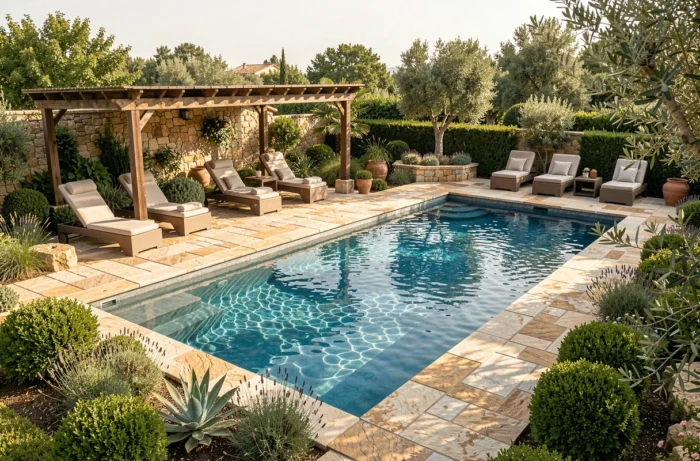
Landscaping around a swimming pool affects both the durability of the materials and everyday comfort. Choosing surfaces, ensuring compatibility with standardized safety features, and managing local water restrictions: making the right technical decisions upfront helps avoid costly rework. Here are ten practical ideas, listed in no particular order, for designing the area around your pool.
1. Slip-resistant reconstituted natural stone pool surround
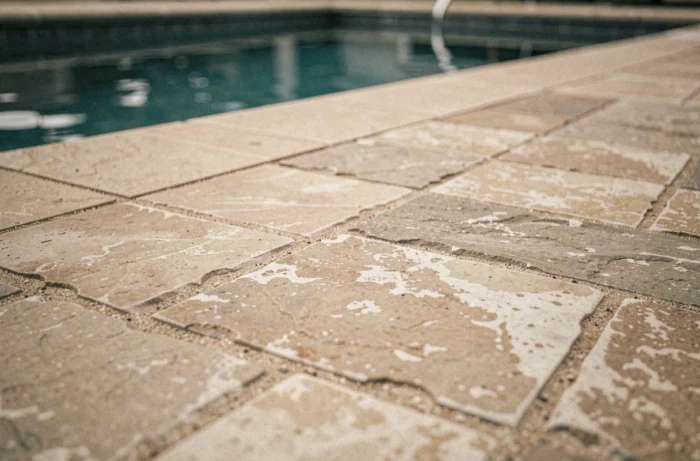
Reconstituted stone offers frost resistance and a slip-resistance rating that untreated natural stone does not always provide. Shot-blasted or bush-hammered paving slabs retain their grip even when wet, reducing the risk of slipping when getting out of the pool.
We recommend checking that the surface has an R11 or R12 rating before installation. A layout with permeable joints limits standing water and makes dry cleaning easier—something to plan for when drought orders prohibit washing outdoor surfaces with water.
2. Overhanging large-format porcelain stoneware coping
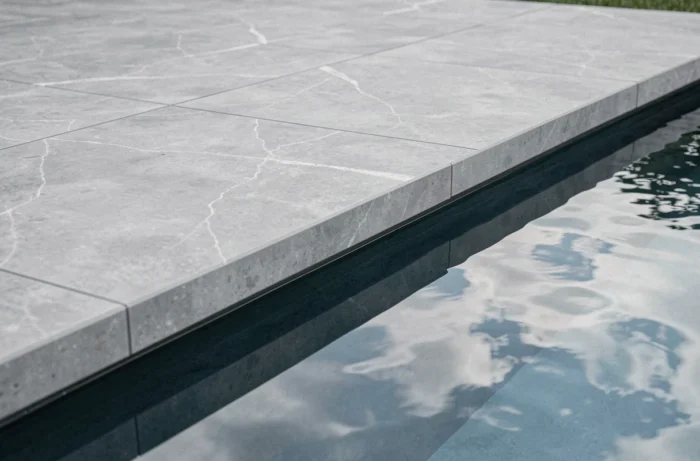
Large-format porcelain stoneware slabs (from 60 x 60 cm) create a clean, streamlined coping line with fewer joints. Their near-zero porosity makes them resistant to chlorine splashes and sunscreen stains.
The minimum thickness for installation on pedestals around a pool is generally about 20 mm. Choosing rectified porcelain stoneware allows for narrow joints, enhancing the seamless look between the pool surround and the adjoining patio. Landscaping around the pool feels more cohesive when the same material extends toward the house.
3. Mediterranean planting bed with low water needs
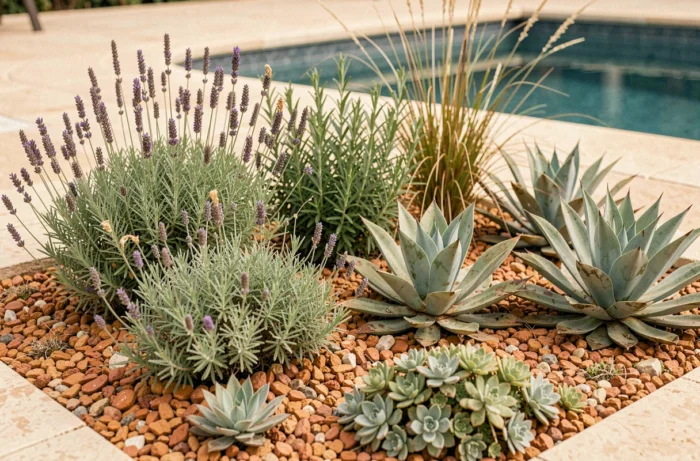
Local water restrictions, which can be checked on the VigiEau website, may even prohibit watering planting beds during a crisis. Choosing drought-tolerant plants is therefore not just an aesthetic decision; it may also be a regulatory requirement.
Lavender, rockrose, agapanthus, and ornamental grasses such as Nassella tenuissima can withstand the heat reflected by the pool surround without regular summer watering. Planting them at least one meter back from the edge reduces the amount of foliage falling into the pool and how often the skimmer needs cleaning.
4. Raised composite deck with a ventilated substructure
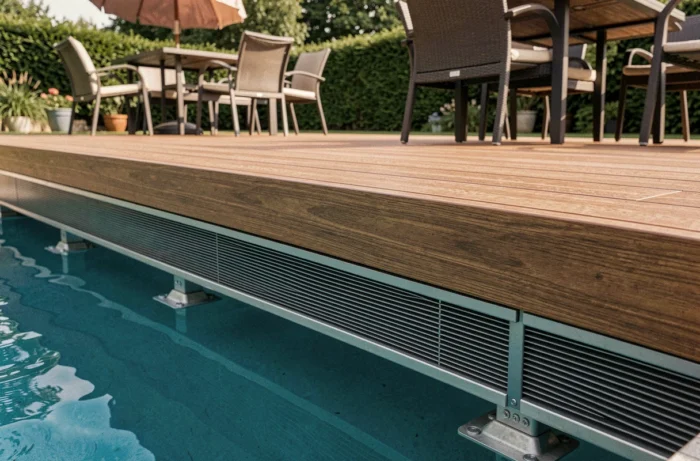
Composite decking boards withstand splashes without turning gray, provided the supporting structure is ventilated. A clearance of at least 5 cm beneath the joists prevents moisture from building up and extends the life of the entire deck.
For a deck raised more than one meter above natural ground level, the required guardrail is separate from the pool safety barrier. The two features are subject to different standards and must be checked separately during the design process.
5. Low-voltage recessed lighting in the coping
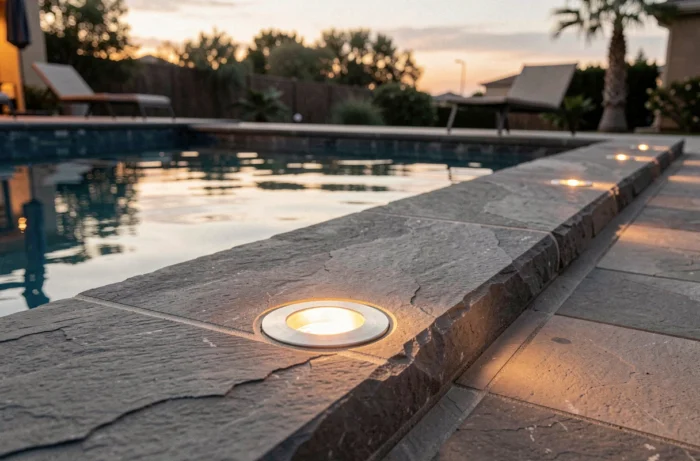
12 V LED spotlights recessed into the coping mark the perimeter of the pool without causing glare. Low voltage is a technical requirement in wet areas, not an optional extra.
Pointing the lights away from the pool, rather than toward the water, prevents unwanted reflections. For a warm atmosphere, a color temperature of around 2,700 K enhances stone or wood without distorting the color of the pool liner.
6. Gabion wall with greenery for privacy
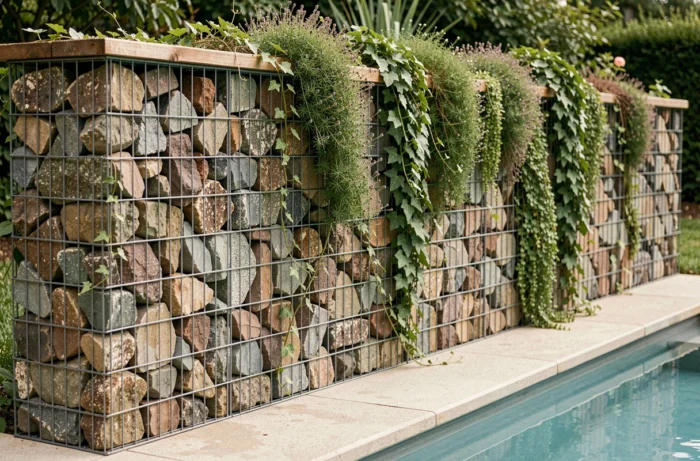
A gabion wall combined with climbing plants (star jasmine, trachelospermum) provides privacy without requiring prior planning permission, as long as it remains under two meters high. Its thermal mass stores heat during the day and releases it in the evening near the swimming area.
One important point: the wall must not provide a foothold for climbing over the pool safety barrier. The law requires that landscaping must not create a foothold that allows the standardized safety feature for an in-ground pool to be bypassed.
7. Outdoor solar shower integrated into the pool surround
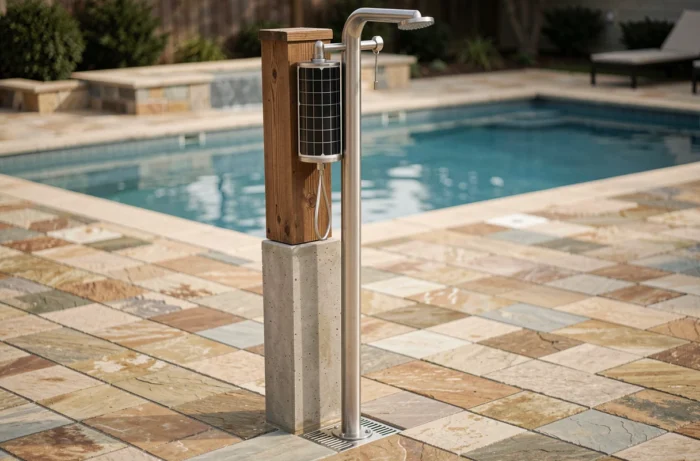
A stainless steel solar shower heats water in a tank exposed to sunlight, with no electrical connection required. Placed on the pool surround near the water, it encourages swimmers to rinse off before getting in, reducing the organic load on the filter.
Plan for drainage into an inspection chamber connected to the wastewater system or into a soakaway. Soapy water must not run directly into the pool or collect on the pool surround.
8. Woven resin lounge set with built-in storage
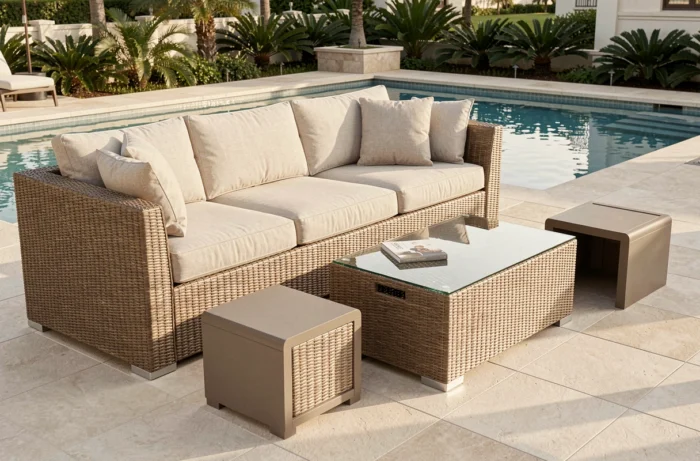
High-density woven resin withstands UV rays and chlorine splashes better than natural rattan. A model with a storage compartment beneath the seat can hold cushions and towels, keeping the area around the pool looking uncluttered.
Secure the furniture legs to the pool surround with non-slip pads to prevent them from shifting in the wind. Positioning the lounge set more than two meters from the edge reduces splashes on the cushions and keeps the perimeter walkway clear.
9. Bioclimatic pergola adjoining the pool surround
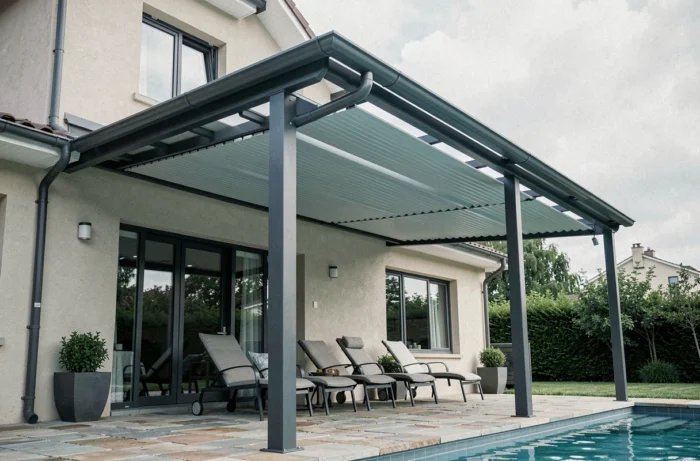
A pergola with adjustable aluminum louvers controls sunlight without blocking airflow. With the louvers open, light can pass through; when closed, they provide rain protection and create a shaded area that can be used even in overcast weather.
The pergola must be positioned in accordance with the required distances from property boundaries. In most cases, a prior works declaration is sufficient for structures with a ground footprint under 20 m², but the local PLU may impose additional requirements.
10. Permeable artificial grass surfacing
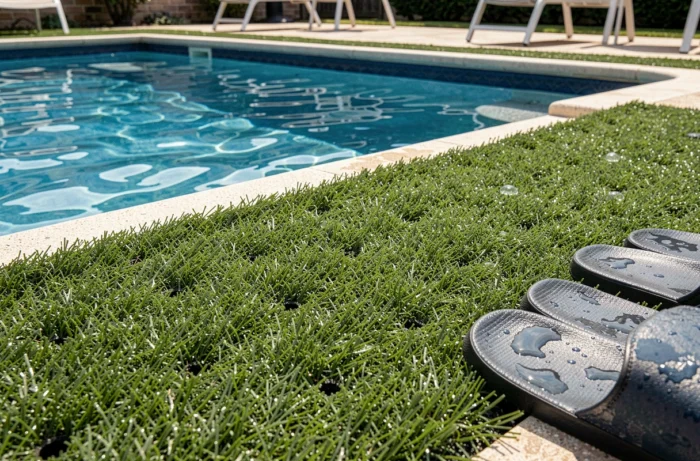
Permeable artificial grass (with a flow rate of more than 60 liters per minute per square meter) quickly drains rainwater and splashes. It eliminates mowing and watering, a clear advantage in areas frequently subject to water restrictions.
Installing the grass over compacted sand with a weed-suppressing geotextile creates a flat, stable surface. The trade-off is that synthetic fibers get hotter than natural grass in direct sunlight—a factor to consider if the pool surround faces due south and has no shade.
- Check that each landscaping feature is compatible with the existing pool safety system (barrier, alarm, cover) to prevent accidental footholds or ways around it
- Check VigiEau before finalizing your choice of plants and water-based maintenance practices
- Choose slip-resistant materials (R11 minimum) for all barefoot areas
Successful landscaping around a swimming pool depends on coordinating pool-surround materials, water-wise planting, and compliance with applicable standards. The most durable choices are those that account for both everyday comfort and local climate conditions.