The comfort of a maternity garment isn’t something you can tell from the label. European Regulation 1007/2011 requires the fibres and their percentages to be listed, but says nothing about waistband stretch, seam chafing or support when sitting.
These factors, which are crucial for freedom of movement, can only be assessed in practice: walking, bending and sitting for extended periods. Focusing on how a garment performs rather than its listed composition completely changes the way you build a maternity wardrobe.
Test maternity clothes in practice, not by the label
A jersey made from 95% cotton and 5% elastane can still be uncomfortable if the belly band digs in when you sit or the side seams rub as you walk. The label tells you nothing about the fit or ergonomics. Before buying, the only reliable test is to mimic everyday movements: sit down, bend over and raise your arms.
For physically demanding jobs, adapting your clothing isn’t enough. A workplace health and safety risk assessment should inform your choice of outfit. Stretchy maternity trousers are no substitute for suitable protective equipment when the job requires it.
In the fitting room or when an order arrives, we recommend checking three things in this order: the waistband doesn’t leave a mark on your belly after five minutes of sitting; the armholes let you raise your arms without the fabric riding up; and the back doesn’t bunch when you stand. If the garment fails any of these tests, you’ll stop wearing it within a few days, whatever the price.
Budget-friendly maternity wardrobe: new, second-hand, borrowed or rented
Maternity clothes are rarely worn for more than a few months. Comparing the options for each use helps you avoid unnecessary purchases and reduce the overall cost without sacrificing mobility.
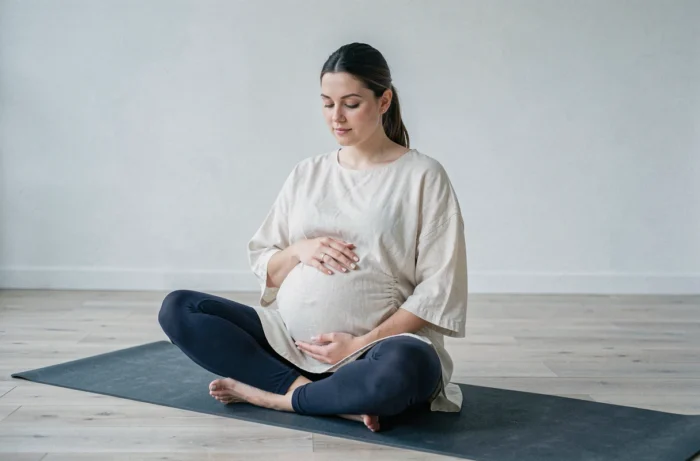
Buying maternity clothes for pregnant women new makes the most sense for items worn every day and in direct contact with the skin: support leggings, bras and underwear. These garments lose their stretch quickly, and buying second-hand no longer guarantees the same level of support.
- For office work, adjustable-waist trousers and two loose-fitting tops are enough. Second-hand is a good option if the elastane hasn’t lost its stretch (a simple stretch test will tell you).
- For walking and getting around, new supportive leggings and a borrowed windbreaker in a size up cover most needs without requiring a dedicated purchase.
- For relaxing at home, borrowing from friends or family works well: loose dresses and oversized T-shirts. These items aren’t subject to much mechanical stress and stay comfortable even after several people have worn them.
- For after the birth, wrap dresses and crossover tops remain wearable for several months. They’re the only maternity pieces worth buying new as a longer-term investment.
Maternity clothing rental is often presented as the sustainable solution, but it remains a niche option. Several brands that tried this model have since dropped it because operating costs are hard to sustain at low volumes. Borrowing from friends or family, or buying second-hand, offers better value and convenience in most cases.
Versatile maternity clothes: cuts that move with you
Instead of accumulating specialist items, focus your budget on three or four genuinely versatile styles to save money and space.
High-waisted trousers with a wide belly band are the most practical option. From the second trimester onwards, the band should come up above your navel to stop it rolling down. A band that rolls down digs into your belly and ends up forgotten in a drawer. Styles with a shaped back seam provide better support than a flat elastic waistband.
A straight-cut dress in heavyweight jersey (such as ponte) works for the office or an evening out: simply add a belt above your belly or a structured jacket. It doesn’t cling anywhere, and with no side zip, it avoids a common source of friction in late pregnancy.
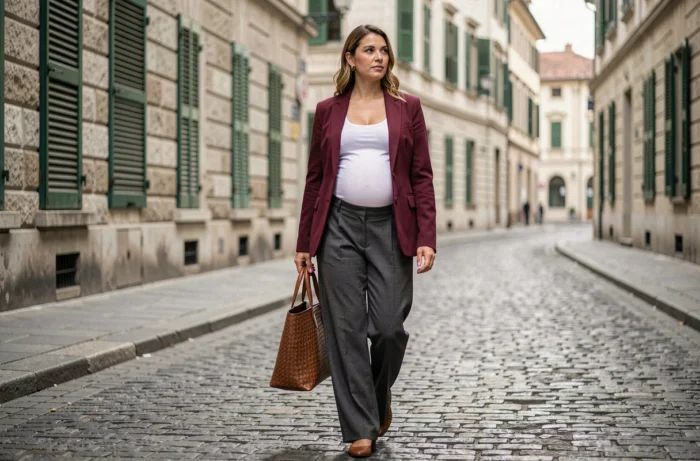
A wrap top is adjustable by design, fits from the first to the third trimester and works for breastfeeding. It’s the only style that lasts through all nine months without needing alterations. Choose a fabric that’s dense enough to prevent it becoming see-through when stretched over your belly in the final trimester.
Fabric composition and durability: more than just immediate comfort
Textile regulations are evolving beyond basic composition labels. European requirements now also cover durability, repairability and what happens to clothes at the end of their life. For a wardrobe worn for just a few months, this makes it worth choosing items that have a realistic second life after pregnancy.
A garment made from a fibre blend (cotton, polyester and elastane) withstands frequent washing better than one made from 100% cotton, but is harder to recycle. The right choice depends on what you plan to do with it afterwards: resell, donate or recycle. Items intended for resale are better made from simple compositions, ideally a single fibre, as they tend to retain their value on the second-hand market.
Second-hand clothing is gaining ground in the textile sector, but maternity brands still have a limited presence in this market. Checking the condition of the elastane before buying second-hand takes just thirty seconds: stretch the fabric and let go. If it doesn’t return to its original shape within two seconds, it will no longer provide adequate support.
Building a comfortable, budget-friendly maternity wardrobe means weighing up each item based on how you’ll use it, how long you’ll wear it and how you’ll acquire it. Buy new the technical pieces you wear every day. Everything else can be bought second-hand, borrowed or lent. The most sustainable garment is the one you’ll keep wearing after pregnancy.