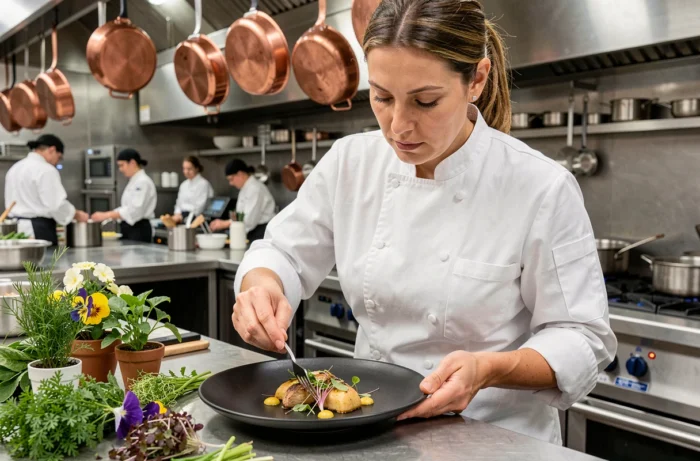
Legumes accounted for 59% of sales volume in the plant-based alternatives category in mass-market retail in 2024, according to Process Alimentaire, as cited by Businesscoot in June 2026.
This figure highlights a quiet shift: new food flavors are no longer born solely in chefs’ kitchens, but also in fermentation labs and on industrial production lines. Understanding food news today means distinguishing innovations that are reshaping everyday meals for the long term from those that remain confined to trade shows.
Precision fermentation and alternative proteins: the technical foundation of new flavors
Precision fermentation is a process in which microorganisms (yeasts, filamentous fungi) are engineered to produce specific proteins, flavors or fats. Unlike traditional fermentation (yogurt, kimchi, miso), it does not transform an existing food: it makes a targeted ingredient from simple substrates such as sugars.
In France, several companies are developing these proteins to go beyond meat substitutes alone. The goal is to create new textures and flavors that can be used in everything from pastries and sauces to dairy-free products. Precision fermentation produces ingredients, not finished dishes, setting it apart from conventional plant-based alternatives made from soy or peas.
Following Double Portion’s latest news helps you spot actual product launches from these sectors, beyond trade-show announcements. That’s because consistent batches, microbiological safety and the stability of these new ingredients remain production challenges identified by industry professionals.
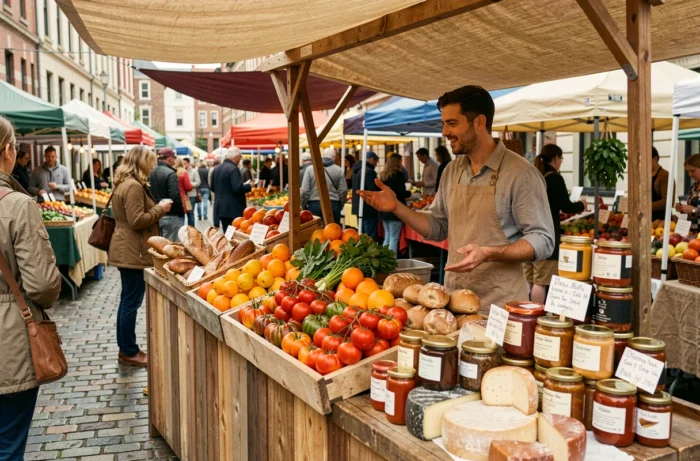
Innovative flavors in mass-market retail: what makes it from trade shows to everyday meals
Every year, SIAL Paris showcases hundreds of food products billed as innovative. The question is which ones make it onto store shelves and, more importantly, into the weekly shopping basket.
Legumes and aquafaba: innovation that’s already here to stay
Chickpeas are a good example of a successful transition. Their cooking water, aquafaba, is used as an egg-white substitute in mayonnaise and vegan desserts. Carob, from the Mediterranean carob tree, is also gaining ground as an alternative to cocoa, thanks to its naturally caramel-like flavor. These ingredients are no longer novelties: they feature in recipes that any home cook can make.
Protein snacks: beyond sports nutrition
Pepsteam’s report on SIAL Paris 2026 notes that protein is moving beyond sports nutrition to target everyday snack breaks. Savory snacks, bars for children’s afternoon snacks and fortified biscuits are appearing on mainstream shelves. This shift in target audience—from athletes to everyday consumers—is a reliable indicator: when a technical ingredient finds a mainstream format, the trend takes hold.
Not every trade-show launch meets the same fate. Some products remain technical demonstrations with no path to broad commercial success, due to uncompetitive pricing or a flavor that doesn’t work for everyday consumption.
Ingredient origins and labeling: the culinary trend shaped by legislation
Food trends are not driven solely by social media or chefs. Regulations play a defining role, one that culinary media often underestimate.
France’s law of August 18, 2026, provides for mandatory origin labeling to be extended to certain meats used in prepackaged foods, as well as aquaculture products and bivalve mollusks. The precise requirements still depend on implementing decrees, but origin labeling is becoming a factor in consumers’ choices.
This change directly affects how brands formulate and market their products. A ready meal containing chicken will have to specify where the poultry comes from. For fans of new flavors, the impact is tangible:
- Fusion products (combining ingredients from different origins) will need to provide more detailed traceability, which could hold back some launches while benefiting others that are more transparent.
- Short supply chains and local producers gain a competitive edge over products with unclear or distant origins.
- Plant-based alternatives made with French legumes (Puy lentils, Provençal chickpeas) can use this demand for transparency to set themselves apart.
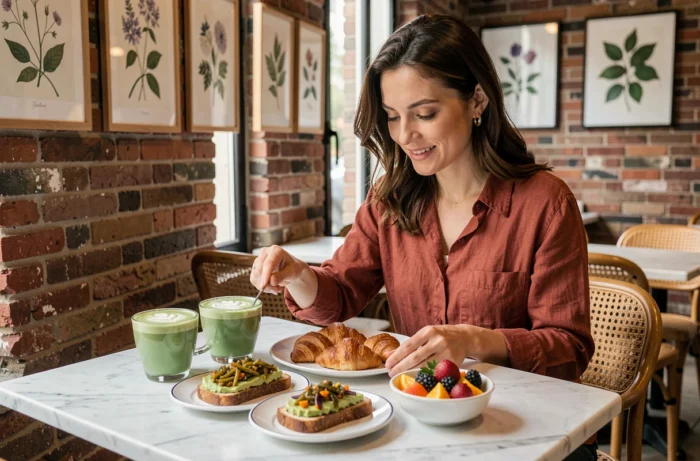
Fusion cuisine and global flavors: genuine enthusiasm or passing fad?
Japanese, Korean, Levantine and Indian cuisines now feature regularly in diets across France, and not just through food delivery. Gochujang (Korean fermented chili paste), yuzu and za’atar are available in supermarkets at reasonable prices.
Culinary fusion works when it simplifies a cooking step. Miso butter, gochujang tomato sauce and chocolate hummus require no special skills. These products make the leap from restaurants to home kitchens because they fit into recipes people already know how to make.
Some ingredients, however, remain novelty purchases. Despite extensive media coverage, food-grade CBD has not found a lasting place in French eating habits. Hemp- or date-based plant milks are available on store shelves, but account for only a small share of sales compared with almond or oat milk. Visibility on social media does not guarantee lasting adoption.
How to spot lasting food trends: three practical criteria
Rather than relying on a list of trendy products, three signals can help you assess whether a new food product is likely to become part of everyday life:
- Its price per kilo is close to that of the product it replaces. As long as a substitute costs three times as much as the original, it remains a niche product.
- The ingredient or product is available in several formats (fresh, frozen, canned, powdered). A range of formats reflects genuine demand from manufacturers and retailers.
- A regulatory requirement encourages its adoption. Expanded origin labeling or nutritional requirements can create new opportunities for compliant supply chains.
The most useful food news isn’t about announcing the next viral TikTok flavor. It documents an ingredient’s journey from the experimental stage to a permanent place on store shelves, at a price and in a format that work for a weekday meal.