
Looking to insure your car without using your bank card on the day you take out the policy? The idea sounds simple, but online car insurance offers with no immediate payment come with a few details worth understanding before you sign anything.
Immediate coverage and deferred payment: two separate mechanisms
When an insurer advertises “no upfront payment,” it is referring to the payment schedule, not the date your policy starts protecting you. Your coverage may begin as soon as your application is approved, while the first payment is not collected until several weeks later.
In practice, the policy start date and the date of the first payment are independent. An insurer can set your coverage to begin on day one and schedule the first payment for day 30 or day 60. This delay can make it seem as though you are paying nothing, even though you are still entering into a financial commitment.
Another detail to watch for: some insurers waive the upfront premium payment but charge an administration fee when you take out the policy. This fee covers the administrative steps involved in setting up your policy. It is not an advance payment toward your monthly premiums, which can cause confusion. To explore plans that genuinely defer the first payment, you can compare no-deposit car insurance with Assurance Rapide and other offers on the market.
Online no-deposit car insurance: what these offers really include
Online insurers use several promotional tactics to attract drivers on a tight budget. Have you noticed how the wording varies from one website to another? Here’s what the main approaches actually mean:
- First month’s premium free: you pay nothing for the first thirty days, then monthly payments begin as usual. The total annual cost stays the same; it is simply spread over the remaining months.
- Deferred first payment: taking out the policy is free, and the first bank debit is made one or two months after the policy start date. This is a cash-flow delay, not a price reduction.
- Referral or promotional offers: one month refunded with a referral code, or the first three months refunded subject to certain conditions. The refund comes later, so you need to pay the amount upfront.
None of these options eliminates the cost of insurance. They only change when you pay. This distinction is essential if you want to avoid unpleasant surprises when your first bank statement arrives.
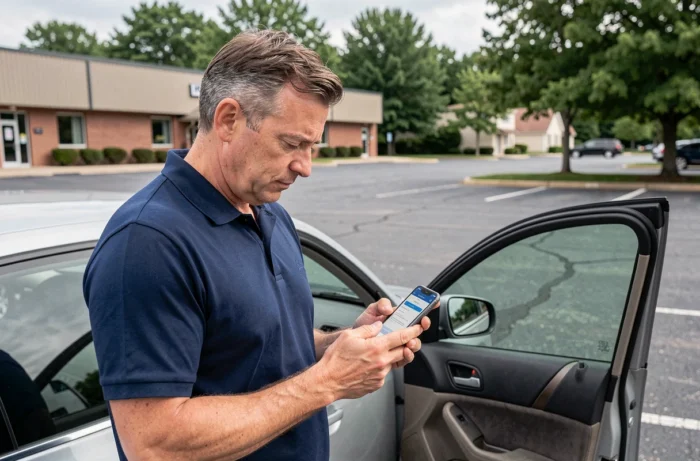
Paying in installments and the risk of payment issues: the rejected direct debit trap
Choosing monthly payments with no upfront payment means spreading out the cost. But this flexibility has a downside: a rejected direct debit can lead to your policy being suspended.
If your bank rejects a payment (for insufficient funds or because your bank details have changed), the insurer will send you a formal notice. You will then have a set period to bring your payments up to date. If you do not pay within that period, your coverage will be suspended. You will then be driving without valid insurance, which is an offence.
This risk is more common than you might think with no-deposit plans. Without an initial payment, some drivers forget that the automatic payment must go through from the first scheduled due date. Make sure there will be enough money in your bank account on the date of the first debit.
Changing banks during your policy
If you change banks after taking out your policy, remember to give your insurer your new bank details before the next payment is due. A SEPA direct debit mandate linked to an old account will automatically be rejected.
Insured Vehicle Database: proof of insurance has changed
Since April 1, 2024, the paper green card is no longer the standard proof of insurance for vehicles registered in France. Proof of insurance is now based on the Insured Vehicle Database (FVA), which law enforcement can access.
When you take out a policy online, keep the document sent by your insurer (insurance certificate or insurance memo). There may be a delay between your policy start date and the FVA being updated. During this period, the document from your insurer serves as proof of insurance if you are stopped.
This is particularly relevant when taking out a policy with no upfront payment: even if your coverage starts before your first payment, your vehicle must still appear in the database. Check this with your insurer when you sign up.
What to check before taking out car insurance with no immediate payment
Before accepting an offer, a few checks can help you avoid the most common pitfalls:
- Read the policy terms to find the exact date and amount of the first payment. A “no upfront payment” policy may still require an administration fee on the day you take it out.
- Compare the actual coverage included in the plan (third-party, extended third-party, comprehensive), not just the advertised price. A no-deposit third-party plan is still a third-party plan, with the same coverage exclusions.
- Check whether you have a right to cancel. Taking out car insurance online does not automatically give you a cooling-off period. It is better to check the coverage and excesses before accepting the offer than to rely on being able to cancel afterward.
- Ask for a detailed quote showing the total annual cost, including administration fees. Comparing two offers based only on the monthly payment can give you a misleading picture if one includes fees that the other does not.
Taking out car insurance online without paying an upfront amount is possible with several insurers. The real challenge is not finding an offer, but understanding when and under what conditions payment will be collected. A policy with no upfront payment is not a free policy: it simply defers the first payment. Keep your bank details up to date, read the payment terms, and make sure the plan you choose genuinely meets your needs on the road.