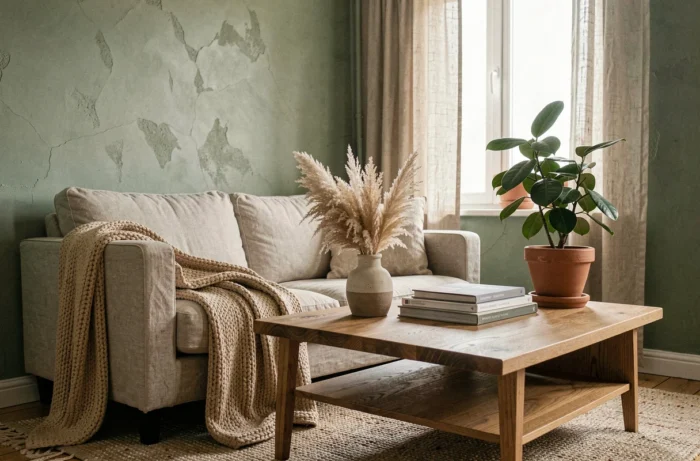
Choosing a wall covering, textile or piece of furniture without considering volatile organic compound emissions is to treat decorating as a purely visual exercise. Paints, adhesives, varnishes and particleboard release pollutants that degrade indoor air quality for months after installation. A well-planned decorating project takes this into account from the outset, not at the end of the work.
Decorating materials and indoor air quality: the invisible factor
Most decorating guides list trending colours and material combinations without mentioning their emissions. Volatile organic compounds (VOCs) found in paints, wallpaper adhesives and some engineered-wood furniture are a technical factor to check before making any purchase.
We recommend weighing aesthetic choices against health labels. In France, construction and decorating products carry a label ranging from A+ (very low emissions) to C (high emissions). Consistently choosing A+ or A-rated products reduces exposure without limiting your options: mineral paints, lime plasters and hardwax oils for solid wood offer a broad range of decorative possibilities.
Ventilation also plays a complementary role. Applying decorative plaster in a room without mechanical extraction or adequate windows traps residual emissions. Before scheduling the work, check the room’s air exchange rate to avoid compromising indoor air quality in the name of aesthetics.
For more practical advice, HyperScoop’s home section brings together articles on decorating and everyday life at home.
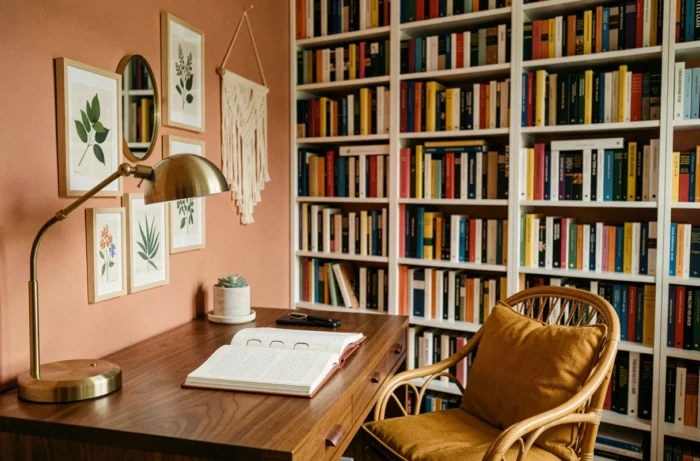
Reclaimed materials in interior design: technical checks before styling
Salvaging an old door, demolition bricks or reclaimed beams for use in an interior is both an aesthetic and sustainable choice. A common mistake is to move straight to styling without first assessing the material.
- The fire resistance of reclaimed wood depends on its species, remaining thickness and condition. Wood damaged by woodworm or treated with an old product may no longer meet safety requirements, especially when used structurally (for a heavy wall shelf or decorative lintel).
- Old bricks or tiles salvaged from a demolition site need to be checked for compatibility with their intended substrate: the wall’s load-bearing capacity, mortar adhesion and any lead in the original joints.
- Metal elements (wrought ironwork, grilles, industrial table legs) may have layers of lead-based paint. A simple colour-change test before sanding or blasting is enough to make the process safer.
Including these checks in the project schedule helps avoid unpleasant surprises. A salvaged item that needs antifungal treatment or professional paint stripping can delay installation by several weeks.
Orientation, light and colour choices: think of the room as a system
Choosing a wall colour from a paint chart in a shop, under artificial lighting and without knowing the room’s orientation, often leads to disappointing results. Perceived colour depends directly on the light it receives, which varies with exposure, the season and external obstructions (nearby buildings, vegetation).
A north-facing room receives cool, diffuse light throughout the day. Warm shades (ochre, terracotta, rosy beige) help counter the coolness. By contrast, a south-facing room bathed in direct sunlight can take cool or neutral tones without looking dull.
Thermal comfort and solar shading in decorating choices
Adapting to hot weather directly links decorating choices to home comfort. External solar shading (shutters, blinds, adjustable sun breakers) limits overheating far more effectively than an interior curtain, however thick it may be.
Considering light, orientation and how the room is used together makes it easier to strike the right balance. A south-west-facing living room with large windows benefits from combining external sun shading, light-coloured flooring (which does not store heat) and linen or lightweight cotton textiles, rather than thick velvet that would turn the room into a sauna as early as June.
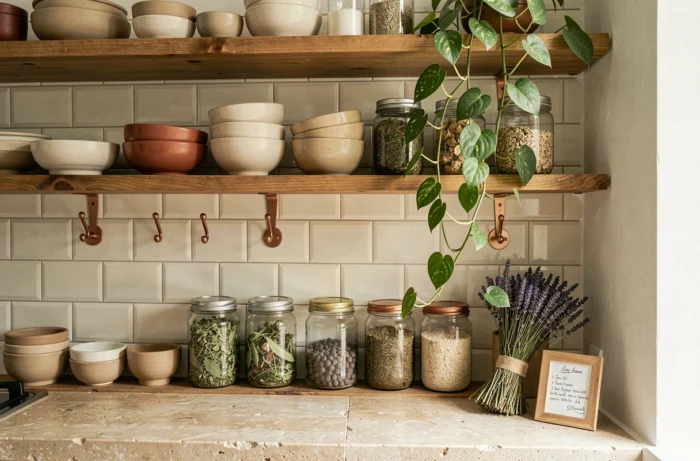
Home energy requirements and decorating: an overlooked connection
Since 1 January 2025, homes rated G on the energy performance certificate can no longer be offered for rent in mainland France. Energy-efficiency renovations change the surfaces and space available for decorating. Internal wall insulation reduces the usable floor area by several centimetres per wall, making it necessary to rethink furniture proportions and circulation within the room.
Planning these works before investing in a complete decorating scheme helps avoid having to dismantle everything. Installing high-end wallpaper on a wall that will be lined six months later is pure waste. The logical order is to address the building envelope (insulation, windows and doors) before decorative finishes.
Insulation materials and aesthetic finish
Interior wall linings vary in their decorative potential. A plasterboard-and-insulation system provides a smooth surface ready for painting. A lime-hemp insulating plaster, which is more artisanal, creates a textured finish that can become a decorative feature in its own right, with no additional covering required.
We find that this overlap between energy performance and style is rarely addressed in conventional decorating content, even though it determines the durability of any interior design project.
Furniture, accessories and textiles: balancing style and durability
Solid-wood furniture (oak, walnut, beech) develops a patina over time and can be restored. Melamine-coated particleboard furniture lasts only a few years and cannot be repaired. The choice of material therefore affects the longevity of the style as much as the initial budget.
For textiles, linen, heavyweight cotton and wool withstand repeated washing better than synthetic fibres, which lose their shape and release microparticles. A linen cushion will age with a natural crease, adding character to the room rather than detracting from it.
When it comes to decorative accessories, less is still more. A few pieces chosen for their material, origin or personal story give an interior a distinct identity. Accumulating mass-produced objects has the opposite effect: a generic look that could belong to anyone.