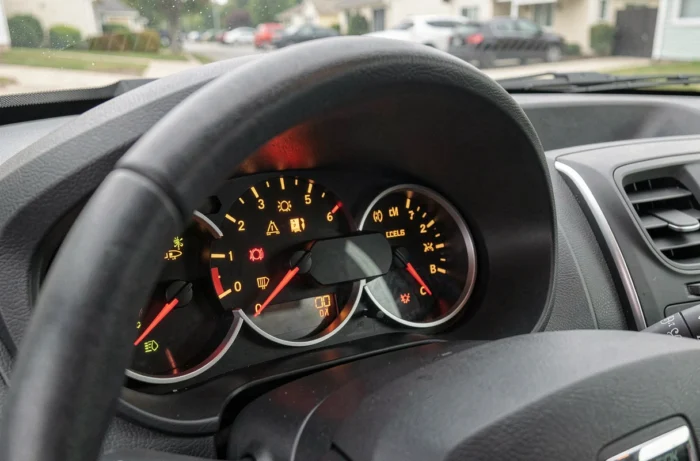
A warning light comes on on a Dacia’s dashboard, and the first reaction is usually somewhere between ignoring it and frantically searching for the manual in the glove compartment. The problem is that not all warning lights are equal: their color, behavior (steady or flashing), and the model in question can radically change what you should do next. Comparing these factors makes it easy to distinguish between an informational alert, a check to schedule, and a reason to stop immediately.
Dacia warning lights by color and urgency: comparison table
The color code is the first point of reference across all Dacia models, from the Sandero and Duster to the Jogger and Logan. There are three clear levels.
| Color | Urgency level | What to do | Common examples |
|---|---|---|---|
| Red | Critical | Stop as soon as possible; switch off the engine if necessary | Oil pressure, engine temperature, braking, airbag |
| Orange | Prompt check | Drive cautiously and schedule a diagnostic check within a few days | Engine warning light (injection), zigzag, tire pressure, ABS |
| Green / blue | Informational | No action required | Turn signals, low beams, high beams |
A red warning light means you must stop the vehicle, even if you cannot feel anything wrong. For example, a red oil warning light indicates insufficient oil pressure, which can cause engine failure within just a few miles. An orange warning light, on the other hand, allows you to drive carefully to a garage or diagnostic center.
For details on each symbol on the Sandero, the Dacia Sandero warning light list covers the indicators, their symbols, and the corresponding actions to take.

Dacia zigzag warning light: differences between orange and red by model
The zigzag warning light (also known as the multifunction warning light) is specific to Dacia and some Renault models. Its symbol—a sine wave inside a rectangle—appears on the Duster, Sandero, Sandero Stepway, Logan, Lodgy, Dokker, and Jogger.
Orange zigzag: moderate alert, multiple possible causes
When orange, this warning light generally indicates an electronic fault, a faulty sensor, or maintenance that is due. It may appear alongside other warning lights, which can change how it should be interpreted.
- Orange zigzag alone: a non-critical engine or electronic fault. You can continue driving if there are no symptoms (loss of power, jerking, or unusual noise).
- Orange zigzag with the engine warning light: likely an injection or sensor fault. An OBD diagnostic can identify the exact fault code.
- Orange zigzag with the tire pressure warning light: check the tire pressures first before suspecting an electronic problem.
- Orange zigzag with the wrench symbol: maintenance reminder (oil change, service). Resetting it after the work is done will turn off the warning light.
Red zigzag: stop required
When red, the zigzag warning light indicates a serious fault (engine or safety-related). Any loss of power accompanied by a red zigzag warning light means you should stop immediately. Continuing to drive in these conditions could make the problem worse and increase repair costs.
How to identify a Dacia warning light without the right manual: diagnostic method
Dacia has produced several generations of the Sandero, Duster, and Logan, each with different dashboards. The manual supplied with a used vehicle does not always match its exact year or trim. The official website, user-manual.dacia.com, also notes that the availability and operation of displays depend on the equipment and country.
If the printed manual is missing or does not match your vehicle, there are three practical options.
The first is to check the online manual on the Dacia website. Simply select the model, year, and engine to access the relevant dashboard pages. The symbols are shown with their meanings and the corresponding instructions.
The second option is to connect an OBD reader to the vehicle’s diagnostic port. The tool displays active fault codes, removing any uncertainty about the system involved (injection, ABS, ESP, airbag). An OBD diagnostic costs less than a repair based on guesswork.
The third option is to check the warning lights when starting the vehicle. When you turn the ignition on, all the lights briefly illuminate and then go out. If one remains on after a few seconds, it indicates an active fault. This behavior is the same across the entire Dacia range.

Common mix-ups between Dacia models: warning lights that look alike
Switching from a Sandero to a Duster, or from a first-generation model to a third-generation one, can lead to misinterpretation. Two cases come up regularly.
The ESP and traction control warning lights differ in one small detail in their symbols (a car with skid marks versus a car with a key). On some versions, deactivated ESP is shown by a steady light, while an ESP fault makes the same symbol flash. A driver used to a Lodgy may misinterpret how the same warning light behaves on a Jogger, where the display logic has changed.
The tire pressure monitoring system (TPMS) warning light can also cause confusion. On Dacias equipped with direct sensors, it identifies a specific tire. On versions with indirect detection (via the ABS), it indicates a general issue without identifying the affected wheel. Confusing the two systems can lead you either to overlook a slow puncture or to look for a sensor that is not there.
To avoid these mix-ups, the most reliable approach is to consider the warning light’s color (red, orange, green), its behavior (steady or flashing), and any symptoms you feel while driving. This three-part check works regardless of the model or year, even without the manual to hand.
The key takeaway is simple: a steady or flashing red warning light on a Dacia cannot wait. Everything else calls for diagnosis, not an emergency response.